Source Recyclable Pet Clamshell Packaging for Fruit, Salad, and Bakery
Find and compare 30 listings for recyclable pet clamshell packaging designed for fresh produce, salads, and bakery items. These transparent containers offer single or two-sided printing options, customizable sizes, and competitive pricing for bulk orders.
Key considerations
Products List




Comprehensive Sourcing Guide
Recyclable Pet Clamshell Packaging Sourcing Guide
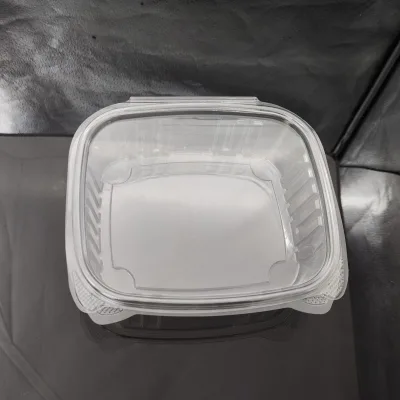
Sourcing recyclable PET clamshell packaging requires a disciplined approach that balances material performance, regulatory compliance, and commercial viability. Polyethylene terephthalate (PET) is a widely recognized thermoplastic polymer known for its clarity, strength, and recyclability, making it a preferred choice for food-grade packaging solutions. Buyers must navigate a market where product attributes vary significantly across suppliers, from specific model numbers to custom sizing capabilities. This guide provides evidence-based procurement strategies to help buyers identify suitable suppliers, verify technical specifications, and mitigate supply chain risks associated with plastic food containers.
The following sections outline the critical steps for evaluating suppliers and products in this category. By focusing on verified listing signals, technical verification, compliance documentation, cost structures, supplier qualification, and long-term procurement checks, buyers can make informed decisions that align with their operational needs and sustainability goals. The guidance herein is derived from observed market data and trusted industry knowledge, ensuring that recommendations are practical and grounded in real-world sourcing challenges.
Product Scope and Observed Listing Signals
The observed product landscape for PET clamshell packaging reveals a diverse range of offerings tailored to specific food applications, particularly fruit and general food storage. Listings frequently highlight attributes such as "Two-Sided" or "Single" printing pages, indicating that customization options extend beyond physical dimensions to include branding and labeling capabilities. The material composition is consistently identified as PET, with some listings explicitly noting "Plastic Type: Pet Material," which confirms the polymer base. Buyers should note that while "recyclable" is a key descriptor, the actual recyclability depends on local infrastructure and the presence of contaminants, so verifying the specific PET grade and clarity is essential for end-user acceptance.
Observed product models and dimensions vary widely, suggesting that suppliers offer both standard and customized solutions. Specific model identifiers such as Z-010, Z-015, Z-019, and Z-001 appear alongside dimensional standards like 25X22X20 cm, 14011560mm, and 18312280mm. This variability indicates that buyers cannot rely on a single off-the-shelf product for all needs; instead, they must match their product dimensions to the appropriate clamshell size. The presence of "Customized" size attributes and "Custom Order: Accept" signals further confirms that many suppliers are equipped to handle bespoke requirements, which is crucial for brands seeking unique packaging aesthetics or specific fit for irregularly shaped produce.
Technical Specifications to Verify
Verifying the physical dimensions and structural integrity of PET clamshells is paramount to ensuring product protection and shelf appeal. Buyers must cross-reference the supplier’s stated model numbers with actual dimensional data, as discrepancies can lead to packaging failures or inefficient palletization. For instance, listings specify models like St15 with sizes of 27017750mm, while others cite 18164.8cm or 18712245mm. It is critical to request physical samples or detailed CAD drawings to confirm that the internal cavity dimensions accommodate the product without excessive void space, which can cause damage during transit, or excessive tightness, which can compromise the seal.
Material thickness and clarity are also key technical factors that influence both durability and consumer perception. While listings often describe the product as "Transparent" and "Disposable," the specific gauge of the PET material is not always explicitly stated in summary data. Buyers should verify the wall thickness to ensure it meets the rigidity requirements for the intended product weight. Additionally, the "Feature: Disposable" attribute suggests single-use applications, but buyers must confirm that the material retains its integrity under typical storage conditions, including temperature fluctuations. The "Product Name: Plasic Food Fruit Container" and similar descriptors indicate a focus on food safety, but the actual material grade must be confirmed to ensure it is suitable for direct food contact.
Compliance and Safety Documentation
Food contact compliance is non-negotiable for PET clamshell packaging, and buyers must ensure that suppliers provide appropriate documentation to verify safety. In many jurisdictions, including the United States and the European Union, materials intended for direct food contact must comply with specific regulations, such as FDA 21 CFR for the US or EU Regulation No 10/2011 for Europe. Buyers should request certificates of compliance or test reports from accredited laboratories to confirm that the PET material does not leach harmful substances into the food. The "Advantage: Competitive Price with Good Quality" claim is insufficient without this backing documentation, as quality in food packaging is primarily defined by safety and regulatory adherence.
Recyclability claims must be substantiated to avoid greenwashing risks and to meet evolving sustainability regulations. While PET is technically recyclable, the actual recyclability depends on the presence of labels, adhesives, and colorants. Buyers should inquire about the recyclability status of the specific product, including whether the clamshell is mono-material or if it contains mixed materials that hinder recycling. The "Standard: ISO 14001:2005" mentioned in background data refers to environmental management systems, not product recyclability, so buyers must distinguish between the supplier’s environmental management practices and the product’s end-of-life characteristics. Verifying that the packaging is free from non-recyclable additives is essential for brands committed to circular economy goals.
Cost Drivers and Commercial Terms
The cost of PET clamshell packaging is influenced by several factors, including raw material prices, mold costs, and order volume. Observed price ranges and MOQs vary significantly, with prices ranging from $0.02 to $26.5 and MOQs from 50 to 100,000 pieces. This wide range suggests that buyers can find options for both small-scale testing and large-volume production, but they must understand the cost implications of each. Lower MOQs may come with higher per-unit costs due to setup fees, while higher MOQs can leverage economies of scale but require greater capital commitment and storage space. Buyers should negotiate pricing based on their projected annual volume to secure better rates.
Shipping and packaging methods also impact the total landed cost. Listings indicate "Shipment: by Sea" and "prod_packing: Plastic Bag+ Carton" or "Single Item," which affects logistics efficiency. Sea freight is cost-effective for large volumes but involves longer lead times, while air freight is faster but more expensive. The "Sample: Acceptable" and "Sample: 3-7days" attributes suggest that suppliers are willing to provide samples, which is a critical step in the procurement process. Buyers should factor in sample costs and shipping fees when evaluating suppliers, as these initial expenses can provide valuable insights into product quality and supplier responsiveness before committing to a large order.
Supplier Qualification and Quality Control
Supplier qualification is a critical step in mitigating supply chain risks, and buyers should conduct thorough due diligence before placing orders. The observed origins, including Qingdao, Shandong, and Tianjin in China, indicate a concentration of manufacturing capabilities in specific regions. Buyers should verify the supplier’s business license, production capacity, and quality management systems. While ISO 14001:2005 is mentioned, buyers should also inquire about ISO 9001 certification, which indicates a robust quality management system. Requesting references from existing clients and conducting factory audits, either in person or through third-party agencies, can provide valuable insights into the supplier’s operational reliability.
Quality control processes should be clearly defined and agreed upon before production begins. Buyers should establish clear acceptance criteria for product dimensions, material clarity, and seal integrity. The "Customization: Available" attribute suggests that suppliers can accommodate specific requirements, but this also increases the complexity of quality control. Buyers should implement a pre-production sample approval process and consider third-party inspection services for large orders. The "Advantage: Competitive" claim should be validated through consistent quality performance over time, as price alone is not a reliable indicator of supplier reliability. Establishing a clear communication channel for addressing quality issues is essential for maintaining a smooth supply chain.
Long-Term Procurement Checks
Long-term procurement success depends on continuous monitoring of supplier performance and market trends. Buyers should regularly review supplier performance metrics, including on-time delivery rates, product quality consistency, and responsiveness to issues. The "Custom Order: Accept" attribute indicates flexibility, but buyers should ensure that this flexibility does not come at the expense of quality or lead times. Regularly re-evaluating the supplier’s capacity to meet changing demand patterns is crucial, especially for seasonal products like fruit packaging. Building a strong relationship with the supplier can lead to better pricing, priority production, and collaborative innovation in packaging design.
Sustainability and regulatory changes are also key factors to monitor in the long term. As global regulations on single-use plastics and recyclability evolve, buyers must ensure that their packaging solutions remain compliant. The "Recyclable" nature of PET is a significant advantage, but buyers should stay informed about changes in recycling infrastructure and consumer behavior. Engaging with suppliers who are actively investing in sustainable practices and innovative recycling technologies can provide a competitive advantage. Regularly reviewing the total cost of ownership, including logistics, waste management, and regulatory compliance costs, will help buyers make informed decisions that support their long-term business objectives.
FAQs
What materials are used for these fruit clamshells?
The packaging is manufactured from PET plastic material, ensuring durability and clarity for fruit display. These containers are designed to be disposable and suitable for food applications. The transparent color allows for easy product visibility, while the material choice supports standard recycling streams for post-consumer waste management.
Can I customize the size of the plastic containers?
Yes, customization is available for the product dimensions to meet specific packaging needs. Standard models include sizes like 140*115*60mm and 270*177*50mm, but custom sizes can be requested. This flexibility allows buyers to select the exact fit for their fruit products, ensuring optimal protection and presentation during storage and transport.
What is the minimum order quantity for these items?
The minimum order quantity varies by model, typically ranging from 30,000 to 100,000 pieces. Specific models may have different thresholds, such as 30,000 PCS for certain clamshells. Buyers should verify the exact MOQ for their chosen model number, as bulk orders often benefit from competitive pricing structures and efficient production scheduling.
How long does it take to receive samples?
Sample production generally takes 3 to 7 days for delivery. Samples are acceptable for quality verification before placing bulk orders. This lead time allows buyers to assess the material quality, printing options, and structural integrity of the clamshell packaging, ensuring it meets their specific requirements for fruit packaging and food safety standards.
Where are these plastic food containers manufactured?
The products originate from manufacturing locations in China, specifically including Qingdao, Shandong, and Tianjin. These regions are known for their robust plastic manufacturing infrastructure. Buyers can expect consistent quality and competitive pricing due to the established supply chains in these areas, facilitating efficient logistics and shipment arrangements for international orders.
Are these clamshells suitable for single-sided printing?
Yes, the packaging supports both single-sided and two-sided printing options. This feature allows for flexible branding and labeling strategies for fruit products. Buyers can choose the printing configuration that best suits their marketing needs, ensuring clear product information and attractive visual appeal on the transparent PET material without compromising structural integrity.